The Clock Tower in Sighisoara
After first visiting Sighisoara, one of the oldest and most beautiful cities of Romania, keeping alive it's medieval charm and elegance, you begin to understand why this place was selected to be European cultural capital in 2007. It all makes sense, when discovering step by step the wonderfully preserved architectural creations, centuries old, the narrow and twisting streets, the old houses, the museums, the nature, the atmosphere. Sighisoara is a special place for all, and many keep returning here time and time again.
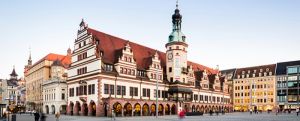
Among the many structures and especially among the towers - each one bearing the name of a trade or guild - there is a particular one, more than impressive : the Clock Tower or the Gate Tower, a great example of mechanical brilliance and architectural mastership. The clock with small figures, present here, is the only one of this type in Romania and one of the few in the whole world. With a height of over 64 meters, the Clock Tower is by all means a sight to behold, yet most of the visitors have eyes for the huge clock, on the fourth floor (the fifth and final one is actually an open balcony). The roof, with a pyramid shape, has two small domes. Over this domes there is a small golden globe, and over this a rooster made out of metal, which turns on the wind.
A special one, this Clock Tower. Since 1899, this old, medieval structure was turned into a special and impressive museum, called "Old Sighisoara", ran at first by Iosif Bacon. Over the three floors, visitors have the chance of discovering, through several rare and well kept and presented exhibits, the history, customs, values and legends of the old city. The first major exhibit is a big model of the town, as it was in the 18th century, a model made by one Julius Miselbacher. The rest of the objects, documents and artworks tell the story of the city, from the early times, when Romans conquered the mighty and fearless locals, to the founding and functioning of the powerfull guilds, that practically kept the city going, to the events of the 15th and 16th century, when Vlad Tepes was in Sighisoara. We end this part with the presentation of the Unity achieved by Mihai Viteazul in 1600, and although short-lived, you understand that this moment was crucial in the history of this place. Going up, on the third floor of the tower, we take our first steps in the world of the 17th and 18th centuries, represented especially by a rather large and varied collection of furniture pieces, a fascinating presentation of various styles and trends, from Renaissance to Beidermaier. Another major part of this unusual and special museum is the pharmacy. Yes, it is the section with all the inventory of an old pharmacy, of the 17th century and even older, showing how evolved this trade was, but also how much superstition was still used.
On the fourth floor, we finally reach the Holy Grail of the tower, the very mechanism of the clock, a labyrinth of springs, small and large wheels, tubes and countless pieces of metal, a small universe that only the best of best could ever works out. Yet, this clock - OK, well kept - still keeps on going on and on, counting the seconds, minutes and hours, for some centuries. The clock has two hour plates, 2.4 meters in diameter, and near these in the wall there are several niches, very large, where the figurines symbolizing the days of the week can be found. For this is the main charm of this huge clock - the figurines.
We don't know exactly when the clock and it's figurines were put in the tower, the only document being a small written note from 1648, which says that the "hourglass of the clock was renewed by the master clockmaker Johannes Kirschel". It is very possible that before the fire of 1676 there were other figures, destroyed in the flames. The statuettes that we see today, 0.80 meters tall, made out of lime wood, were installed in 1677, and are seven in numbers, one for each day of the week.
Monday is the day of the Godess of the Moon, and it's figurine is dressed in light blue, carrying a now and arrow, while Tuesday is the day of Mars, the symbol of war, destruction and death, portrayed as a strong man, with a red shirt and blue coat, with a large spear in his hands, being also a symbol of Iron. Wednesday is represented by Hermes, the emissary of the gods, protector of commerce, but also the symbol of the alchemical mercury (the Sun) and silver (the Moon). Thursday - Donnerstag - was the day of the father of the Greek gods, Jupiter, but also of the Wottan in the norselands. The allpowerful figure is here presented as an impressive figurine, wearing a large, golden crown and wearing a red shirt - symbol of the power and quick anger - and a cape made out of fur. His foot is put upon the Earth globe, and he holds in his hands the most powerful weapons : thunder and lightning. Friday could not find another godess than Venus, the perfect choice, protector and symbol of love and beauty, a beatiful young woman that admires herself in a small mirror, held by a little cupidon. Saturday, the day of Saturn, is a bearded figurine, older, dressed in blue and red, it's right leg being black.
Photo : telegraph.co.uk
2007-12-10
Adauga un comentariu
Alte informatii din Recommended News
Victoria's Secrets was established in San Francisco in 1970 by Roy Raymond. The idea of the concept was to create an atmoshere similar to that of a victorian boudouir. Today the Vicroria’s Secrets lingerie is the top performer in this industry and is a leading retailer by operating more than 1000 stores only across the United States of America. The world’s most glamurous lingerie is sexy, youthful and romantic. Women and men recognize Victoria’s Secrets as the place to buy ...
When you say “red carpet” you think on elegance, glamour, diamonds, expenssive dresses, beautiful women, refinement, extravagance… a world that you can only dream of. From the glamorous gowns, to the most astonishing jewlry and the perfect coifs we will show you the best looks from the Hollywood red carpet at the Oscar Ceremony 2010. Sandra Bullock The gold and silver beaded and embroidered Marchesa dress looks sexy and very elegant at the same time. She wears platinum and ...
Romy Schneider - is destined to remain in the history of cinema. Her northern German appearance, angular face with prominent cheekbones and the dimple recalls in our memory Greta Garbo and Marlene Dietrich. I admire the inner fire and a strong sense that she puts in the work. In addition, it phenomenally photogenic. (Robert Enrico) Rosemarie Magdalena Alba – Retta was born in Vienna on 23 September 1938. Her parents were actors and they divorced when the girl was only seven years old. ...
Alain Delon, a magnetic handsome performer, was among the most prominent French actors and one of the Cesar Award winners. He was born in Sceaux on November 8, 1935 and as a child was sent away to many boarding schools because of his bad behavior. His parents divorced when he was only four. Alain joined the marines when he was only 17 years old. Between 1953 - 1954 he served as a fusilier marin in the first Indochina War. Upon his discharge he returned to Marseilles. His friend the actor ...
The picture that is presented to the view when one arrives in New York is marvelous, when, after some days of voyaging, in the pearly radiance of a beautiful morning is revealed the magnificent spectacle of those immense cities [Brooklyn and Manhattan], of those rivers extending as far as the eye can reach, festooned with masts and flags; when one awakes, so to speak, in the midst of that interior sea covered with vessels... it is thrilling. It is, indeed, the New World, which appears in its ...
We Recommend
Victoria's Secrets Lingerie
Victoria's Secrets was established in San Francisco in 1970 by Roy Raymond. The idea of the concept was to create an atmoshere similar to that of a victorian boudouir. Today the Vicroria’s Secrets lingerie ...
Publicitate
Artline Info
Carlos Luis de Funes de Galaraza was born July 31, 1914 in Courbevoie a suburb in Paris. His father was a former lawyer of Seville, who became a diamond cutter in France. In high school, Louis liked to fool around behind the backs of the teachers. He ...
BECA: Bridge for Emerging Contemporary Art
Destroying Public Harmony at Brukenthal National Museum
Bucharest Summer University 2010

MNAC presents the fragility of Existence

Movies. Theatre. Concerts
The alchemists concert in Hard Rock Cafe
Friday, April 24, 2010, starting at 22.00, Hard Rock Cafe scene in Bucharest will be organized first Dire Straits tribute concert in Romania.
Stufstock Newcomers at the Elephant Pub
Proms of Delight Music Fest at the Roman Arenas
Club Factory presents All The Punk Things
Silvia Dumitrescu is releasing a Best of album
Books
Danube Delta, Artec Impresiones Publishing
- All sites declared Patrimony of Humanity are among the most exciting destinations in the world, with a gorgeous unique beauty that has to be preserved to the future generations. Because of the universal value that exceeds normal rates of beauty, ... Read article
The woman in white, Penguin Books
Schindler's List, Penguin Books
Newsletter
Today's Persons
Halle Noel
02 Septembrie 1711
Dictionaries
Greatest artists Actors Universal Poetry
Photo Gallery
Benchmark in Romanian Art
Richard Hettie, Romanian - French sculpturer
image : Turkish Man by Richard Hettie - Richard Hettie (sculpturer 1892-1981) was born in Piatra Neamt, Romania and showed talent for drawing and sculpture early on chilhood. His father was of French origin and was for a time in Urban Credit ...
Pavel Alaszu, Romanian painter and illustrator
Foto: Wikimedia.org Paul Alaszu, Romanian painter and illustrator, was born on 11 november 1942, in Timisoara. He studied at the Faculty of Fine Arts at the University of Timisoara, the 1968 promotion. He had professors as Peter Jecsa and Romul Nutiu, ...
Gheorghe Adoc, Romanian sculpturer
Foto:Wikimedia.org From all of his works, the most representative is The Independence Statue from Iasi, located in the market with the same name. It was unveiled in 1980, and was a project that belonged also to Gheorghe Adoc's wife, Gabriela ...
Nutzi Acontz, Romanian paintress
Nutzi Acontz was a Romanian paintress born on 16th November 1894, in Focsani, Vrancea county. She died in Bucharest on 19th December 1957, after a life dedicated to art. She studied at the Fine Arts School in Iasi, this county being also the place of ...
MARCEL GUGUIANU
The artist's works have been unanimously noted with eulogies; Thus underscoring the state-ment of a connoisseur: Here is Marcel Guguianu - another originalsculptor from the Romanian Carpathians who knows authoritatively onAmerica's door.” MOLLIE ...